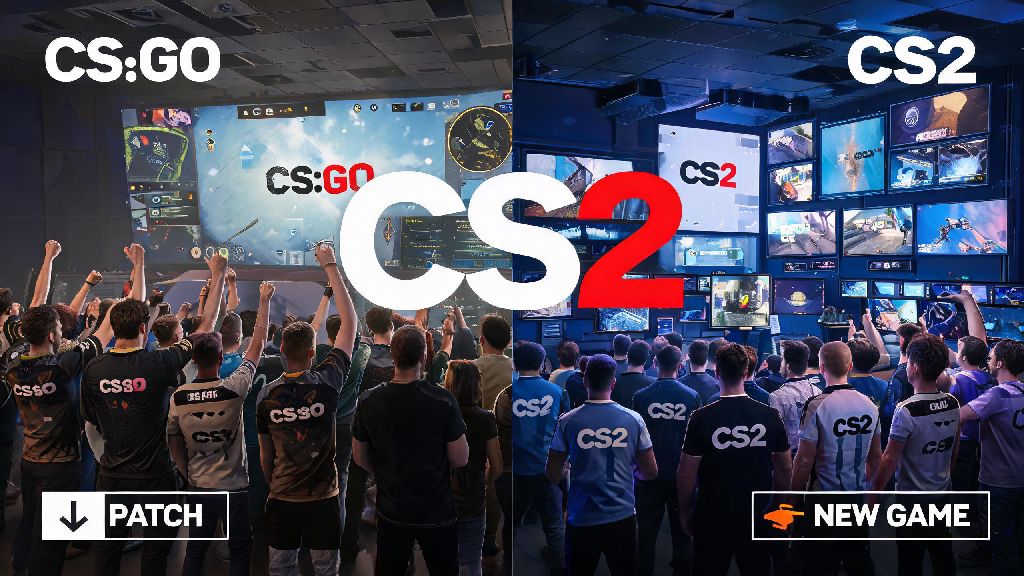
If you’ve been part of the Counter-Strike community for any length of time, you probably remember the chaos of the CS2 announcement a few years back. Half the fanbase was calling it the biggest CS:GO update ever, the other half was swearing it was a full standalone new release, and everyone was fighting in comment sections over which side was right. If you’ve ever asked is counter strike 2 an update or a new game, you’re not alone in that heated debate. We’re breaking down all the launch details, core changes, and community context to help you settle the argument once and for all, plus share tips for making the transition if you’re still holding onto old CS:GO habits.
Is Counter Strike 2 an Update or a New Game? How Valve Framed the Launch
Valve’s original announcement called CS2 a “free upgrade to CS:GO” first, which is where a lot of the “it’s just an update” sentiment came from. The company has a long history of rolling out massive free content drops for CS:GO, from annual operations to full map overhauls, so a lot of players assumed this would be the same scale. But the second the limited beta dropped, it was clear this was way bigger than any past update.
Unlike every previous CS:GO patch, CS2 is built on the Source 2 engine, a completely different framework than the 20-year-old Source 1 engine that ran CS:GO since its 2012 launch. Valve also didn’t offer CS2 as a separate download alongside CS:GO at full launch. It replaced CS:GO entirely in every player’s Steam library, with no option to go back to the old version after the rollout was complete. That’s a choice the company never made for any regular CS:GO update, even the biggest operation drops.
Key Changes That Go Beyond a Standard CS:GO Update
To understand why so many players push back on the “just an update” label, you only have to look at the core changes that simply weren’t possible in the old CS:GO framework. Some of the biggest shifts include:
The dynamic smoke feature alone is a perfect example of how far this is from a standard update. It’s technically impossible to implement interactive, dynamic smoke on the Source 1 engine, so Valve could never have added this feature to CS:GO without rebuilding the entire game. The hit registration changes are another big one: players who spent years perfecting their flick shots and spray patterns had to completely re-learn their aim in CS2, because the server tick rate works differently than it did in CS:GO.
One thing that does feel like an update, though, is the inventory carryover. All your CS:GO skins, stickers, collectibles, and in-game purchases carry over to CS2 automatically, with no extra work required from you. That’s a big reason many casual players still see it as an extension of CS:GO, rather than a separate product.
Reasons Many Players Call CS2 a Separate New Game
For competitive players and long-time fans, the case for CS2 being a new game is pretty clear. First, the core gameplay feel is distinct enough that most pro players needed months of practice to adjust after the full launch. I’ve been playing CS since the 1.6 days, and I can say firsthand that the movement, recoil, and even sound design feel completely different than they did in CS:GO. My old CS:GO config didn’t work at all when I first got into the beta, and I spent three weeks rebinding keys, adjusting my sensitivity, and practicing aim maps just to get back to my old CS:GO rank.
CS2 also runs on completely separate server infrastructure from the old CS:GO servers, so even if you could find a way to launch the old CS:GO client, you can’t queue for matches or play with anyone on CS2. Pro leagues and tournament organizers also dropped CS:GO completely within three months of CS2’s full launch, which they never did for any past CS:GO update.
There are also new game modes and feature plans that were never on the roadmap for CS:GO, including the revised Premier competitive mode, regional rank tracking, and upcoming community workshop tools built specifically for Source 2. All of these are signs that Valve sees CS2 as a separate product that will run for the next decade, just like CS:GO did before it.
What This Means for Your Existing CS:GO Account and Progress
At the end of the day, the label doesn’t matter as much as how CS2 impacts you as a player. First, you don’t have to pay for CS2 if you already owned CS:GO, no matter which side of the debate you fall on. It’s a completely free upgrade, and even new players can download CS2 for free directly on Steam, no purchase required.
All your existing in-game purchases carry over, and many older skins look even better under Source 2’s improved lighting and texture rendering. The only thing that doesn’t carry over is your old CS:GO competitive rank. You’ll have to play 10 placement matches when you first launch CS2 to get your initial rank, and the new per-map ranking system means you can have a different rank on Dust 2 than you do on Mirage.
Valve no longer releases any patches, updates, or security fixes for CS:GO, so all future content drops, balance changes, and operations will be exclusive to CS2. If you’re still holding out on switching, there’s no official support for the old client anymore, so you’re better off making the jump sooner rather than later. Even if you hate the changes at first, most players adjust after a few weeks of regular play, and the new feature pipeline makes it worth sticking around for.
The short answer to the ongoing debate is that CS2 sits somewhere between a massive update and a full new game, but leans far more toward a standalone release for anyone who plays competitively. It keeps the core Counter-Strike gameplay that fans have loved for 20 years, but rebuilds every part of the experience on a new engine that will support the game for years to come. So when someone asks is counter strike 2 an update or a new game, you can tell them it’s both, depending on how you look at it. If you only care about inventory carryover and free access, it’s the biggest CS:GO update ever made. If you care about engine changes, gameplay feel, and long-term support, it’s a brand new Counter-Strike title. Either way, it’s the future of the franchise, and it’s worth giving a shot even if you were a diehard CS:GO fan.