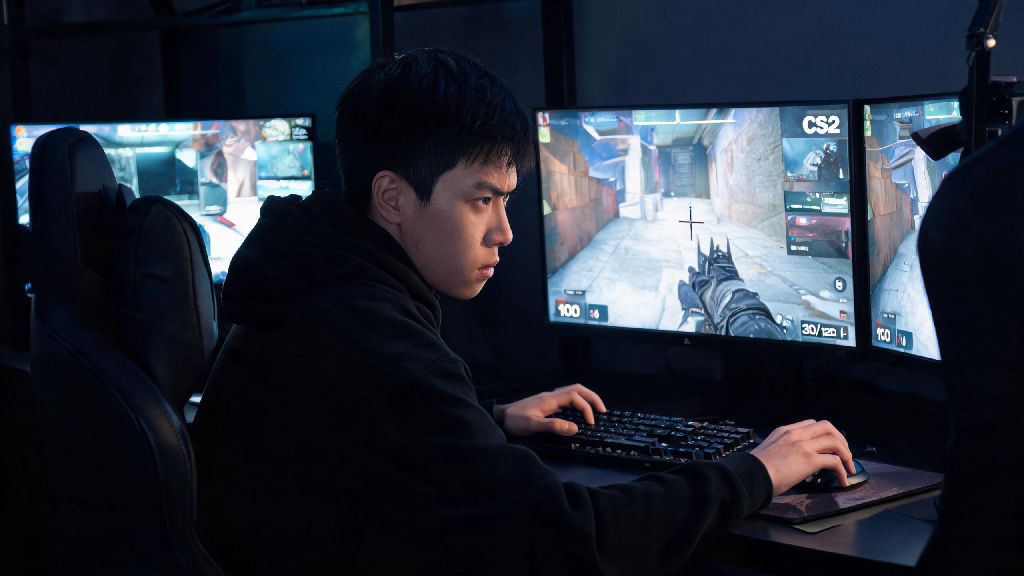
If you’ve ever hopped into a CS2 server only to get one-tapped before you even spot your opponent, you’re not alone. Millions of new players pick up the iconic tactical shooter every month, and learning how to play Counter-Strike 2 can feel overwhelming at first, especially if you don’t have a background in the Counter-Strike franchise. Unlike fast-paced arena shooters that reward chaotic play, CS2 rewards patience, strategy, and consistent practice more than raw reaction speed alone. We’ve put together this guide to walk you through every core mechanic you need to master to go from silver noob to gold rank (and beyond) in a few weeks of regular play.
How to Play Counter-Strike 2: Core Fundamentals to Nail First
The biggest mistake new players make is jumping straight into ranked matches without mastering the basic mechanics that separate good players from great ones. The first skill you need to learn is counter-strafing, the act of pressing the opposite movement key right when you stop moving to reset your accuracy instantly. If you’re running to the right, let go of the D key and tap the A key for a split second before you shoot, and your crosshair will be dead accurate immediately. So many new players just stop pressing movement keys and wait a full second for their accuracy to reset, which gives enemies more than enough time to shoot you first.
Next, master basic positioning and peeking. You should never stand out in the open where multiple enemies can shoot you at once – always stay close to cover so you can duck back if you take damage. When peeking around a corner, use static peeking (leaning out just far enough to see one angle) instead of wide peeking unless you know only one enemy is holding the spot. Wide peeking gives every enemy holding the area a clear shot at you before you can even line up your crosshair, so save it for specific situations where you have a flashbang or teammate covering you.
Perfect Your Aim and Recoil Control For Consistent Kills
Once you have movement down, you can start working on your aim and recoil control. You don’t need a fancy 300Hz monitor or expensive gaming mouse to get good aim – all you need is 15 minutes of consistent practice a day to see massive improvements. The most important part of aim is not flick shots or fast reaction time, it’s crosshair placement. You should always keep your crosshair at head level, lined up with common angles enemies will peek from, so you don’t have to adjust your aim up or down when you spot someone. Most new players keep their crosshair pointed at the ground, which means they waste precious seconds lifting it to head level when an enemy appears.
Every gun in CS2 has a set recoil pattern, meaning the bullets will go the same direction every time you hold down the fire button. For the AK-47, the recoil goes up and slightly to the right, so you can pull your mouse down and slightly to the left to keep your crosshair on target when spraying. You don’t have to learn every gun’s recoil pattern at first – stick to one or two primary weapons until you’ve mastered their recoil, then branch out to others. If you feel your focus slipping after a few rough losses, step away from the competitive queue for 5 to 10 minutes. Tilt is one of the biggest reasons new players lose ranks, because it makes you take stupid risks you’d never take when you’re calm. Lots of players use short breaks to stretch, grab a snack, or play a low-stakes casual game to reset their mood, and Rummy91 is a popular pick for quick, low-pressure play that doesn’t require the same level of sharp focus as CS2 competitive matches. Once you feel calm again, hop back into a casual match to warm up before you jump back into ranked.
Stick to this simple warm up routine before every play session to build consistent muscle memory:
Learn the CS2 Economy System to Avoid Costly Mistakes
Even if you have the best aim on your team, you’ll lose rounds constantly if you don’t understand how the CS2 economy system works. The game gives your team money based on round wins, losses, kills, and bomb plants/defuses. If your team wins a round, everyone gets a big bonus, but if you lose multiple rounds in a row, you get a loss bonus that increases each round until you win. That means if your team lost 3 rounds in a row, it’s almost always better to do an eco round – where you only buy armor and pistols, or nothing at all – so you can all afford full armor, a primary rifle, and utility the next round.
You also need to learn when to do a force buy, where you spend all your remaining money on whatever guns and utility you can afford, even if you can’t get a full kit. Force buys are good if you’re playing the final round of the half, or if winning the next round will give your team enough money to get back to full buys for the rest of the half. I’ve seen so many new players buy a $2700 AK every round even when their whole team is ecoing, leaving them alone against 5 fully kitted enemies and wasting the money they could have saved for a full buy the next round. Always communicate with your team about buy plans before the round starts, so everyone is on the same page.
Use Utility Strategically to Turn Rounds In Your Favor
Utility is one of the most underused tools by new CS2 players, but it can win you rounds even if your aim is worse than the enemy team. A well-placed smoke grenade can block off a whole sightline, so enemies can’t pick off your team as you push a site. A flashbang thrown around a corner will blind anyone looking in that direction, giving you a 2 to 3 second window to shoot them before they can see you. A molotov can force enemies out of cover, or block off a push so you have time to rotate to another site. You should always set aside $400 to $1000 for utility every time you do a full buy – it’s worth every penny.
You don’t have to memorize every line up for every map right away. Start with 2 to 3 basic utility uses for your favorite map first, like a smoke for the main entrance to the A site on Dust 2, or a flash for the catwalk on Inferno. As you get more comfortable, you can learn more advanced line ups. Remember to communicate with your team when you throw utility, so they don’t push right into a flash you threw and get blinded too. Small communication wins like that will make your team way more coordinated, even if you’re playing with randoms.
You don’t have to be a pro player to have fun and climb ranks when you learn how to play Counter-Strike 2. Focus on mastering one skill at a time, don’t get discouraged by losing streaks, and remember to take regular breaks to keep your focus sharp. After a few weeks of consistent practice, you’ll notice your win rate going up, and you’ll be holding your own against much more experienced players. The best part about CS2 is that there’s always something new to learn, so you’ll never get bored of improving your skills.