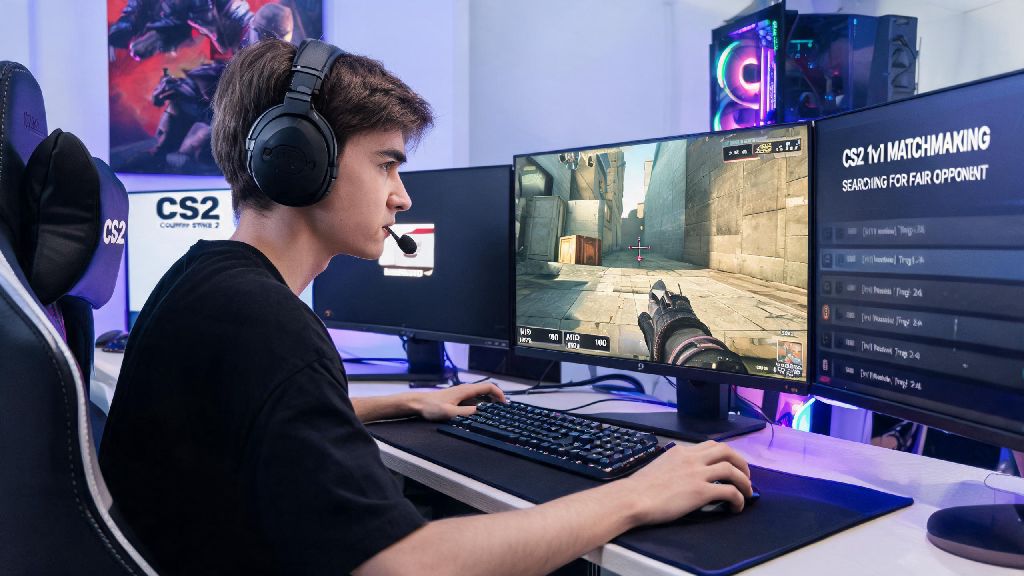
If you’re sick of waiting 10 minutes for a 5v5 competitive CS2 queue only to get stuck with a team that refuses to communicate, 1v1 matches are the perfect low-stakes way to practice your aim and reaction time fast. A lot of new players struggle to figure out how to play 1v1s in Counter Strike 2 public server without running into toxic players, pay-to-win mods, or lobbies with unfair hidden rules. I’ve spent hundreds of hours testing different public 1v1 lobbies over the past year, and this guide breaks down every step you need to find fair matches, set ground rules, and get the most out of every 1v1 session.
How to Find and Join 1v1s in Counter Strike 2 Public Servers
The first step to getting into public 1v1 matches is learning how to filter the in-game server browser to show only relevant lobbies. Open the server browser from the CS2 main menu, then head to the filter tab to narrow down your results. Always sort servers by ping first before filtering for game mode, because even the best 1v1 lobby is unplayable if you’re dealing with 100+ ping and constant lag spikes. Next, type "1v1" into the tag search bar, and uncheck boxes for servers that allow custom mods or have more than 10 active players if you want to avoid long wait times for your turn to fight. Avoid lobbies marked with "pay for advantage" or "custom weapons" if you want vanilla 1v1 play, as these often let players pay for upgraded weapons or perks that make matches unfair for free users. For example, I once joined a lobby that charged $2 for a one-shot AWP, and I left immediately after the first round because there was no way to compete without spending money. You can also save your favorite filters to the server browser so you don’t have to enter them every time you want to play, which saves a ton of time if you play 1v1s regularly.
Setting Fair Ground Rules for Public 1v1 Matches
Public servers don’t have the same standardized rules as official competitive matchmaking, so you’ll need to confirm the ground rules before you start playing any match. Most well-moderated 1v1 servers will post their rules in the chat as soon as you spawn, so take 10 seconds to read through them before you buy your first weapon. If there are no posted rules, send a quick chat message to the other player to agree on basic terms before you start fighting. Never agree to rules that put you at a disadvantage just to avoid conflict – if the other player insists on only using shotguns and you want to practice rifle aim, just leave and find another lobby. Most regular 1v1 players follow a standard set of unwritten rules to keep matches fun and fair for everyone:
Optimizing Your Loadout and Settings for Public 1v1 Play
1v1 matches are way faster paced than 5v5 competitive games, so your usual loadout and settings might not work as well for close-quarters, fast reaction fights. Most public 1v1 servers give you free weapons and armor every round, so you don’t have to worry about saving money or managing your economy between rounds. That means you can focus entirely on adjusting your settings to help you spot and shoot the other player as fast as possible. Set your crosshair to a high-contrast color that stands out against all common 1v1 map backgrounds – bright green or cyan works for most maps, but you can test different colors in a practice lobby to see what works best for you. Turn off unnecessary visual effects like motion blur, depth of field, and anti-aliasing if you’re playing on a lower-end PC, as these effects can slow down your frame rate and make it harder to spot fast-moving players. Test your sensitivity in a practice 1v1 lobby before joining competitive public matches, because even a small change in sensitivity can throw off your aim when you’re fighting someone who’s moving fast around corners. I usually spend 10 minutes warming up in a casual 1v1 lobby before I join any ranked public matches, and it’s helped me cut my reaction time by almost half over the past few months. If you play with a controller, you’ll also want to adjust your aim assist settings to prioritize close-range targets, since most 1v1 maps are small and fights happen within 50 meters most of the time.
Avoiding Common Pitfalls in Public CS2 1v1 Lobbies
Even if you follow all the steps for finding fair lobbies and setting rules, you’ll still run into annoying situations in public servers from time to time. The biggest mistake new players make is getting tilted after losing a few rounds in a row – it’s easy to get frustrated when you lose to someone who’s been playing 1v1s for years, but those losses are the fastest way to learn what you’re doing wrong and improve your skills. Don’t waste time arguing with toxic players in chat, either. If someone starts insulting you after they win a round, just mute them and finish the match, or leave if they keep being toxic. Another common pitfall is falling for trolls who change the rules halfway through a match – I once played a match where we agreed to only use rifles, and the other player pulled out an AWP halfway through and claimed he “never agreed to that rule”. I left immediately, and didn’t waste any time arguing with him. You also shouldn’t share any personal information like your social media handles or location in public server chats, even if you hit it off with the other player. Use the in-game friend request feature if you want to play with someone again later, it’s way safer and more convenient. You should also avoid using exploits even if the other player does, because most server mods hand out permanent bans for exploit use, and you could lose access to your favorite 1v1 lobbies permanently.
Once you get the hang of how to play 1v1s in Counter Strike 2 public server, it’s one of the most efficient ways to practice your core CS2 mechanics without having to commit to a full 40-minute competitive match. You can play a few rounds in 10 minutes between work tasks, or spend an hour warming up before you jump into a ranked 5v5 queue. Don’t be afraid to try out different lobbies and playstyles until you find the ones that fit what you’re looking for, and don’t take losses too seriously – even the best CS2 players in the world lose 1v1 matches all the time. The more you play, the faster you’ll improve, and you’ll start seeing your performance in regular competitive matches improve too before you know it.