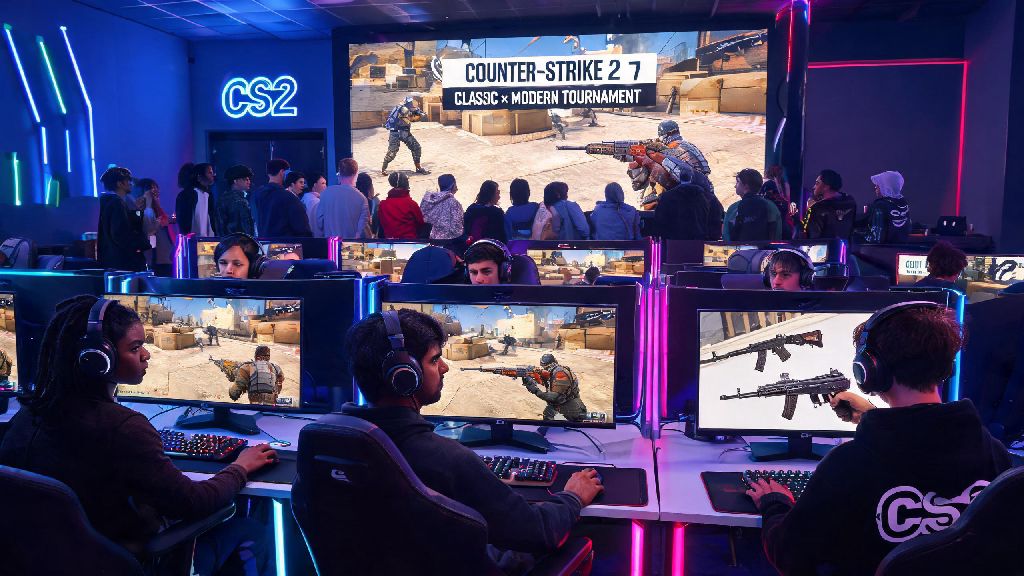
If you’ve logged into any Counter Strike fan forum, Discord server, or Steam community page in the past year, you’ve almost certainly seen the question pop up over and over: will counter strike 2 replace csgo. For millions of players who have sunk hundreds (or even thousands) of hours into CSGO, collected rare skins, climbed competitive ranks, and built friend groups around the game, the question isn’t just idle curiosity—it’s tied to real time, money, and social connections they don’t want to lose. I’ve been playing Counter Strike titles for 12 years, from the original 1.6 through Global Offensive’s peak, and I’ve tracked every update from Valve as CS2 rolled out of beta to full release. This guide breaks down exactly where things stand right now, no hype, no clickbait, just the facts that matter to regular players.
Will Counter Strike 2 Replace CSGO? What Valve Has Officially Confirmed
Valve first announced CS2 in March 2023 as a full, free upgrade to CSGO, built on the updated Source 2 engine, and initially signaled that it would fully replace the older title once the beta period ended. When the full release dropped in September 2023, Valve did swap CSGO’s default Steam library entry to CS2, so most players who opened their existing CSGO install were automatically updated to the new game. But that doesn’t mean CSGO is gone entirely.
Players can still access CSGO by opting into the “legacy” branch in their Steam game properties, a feature Valve has kept available with no announced plans to remove it as of 2024. The catch? The legacy version of CSGO only supports private servers and offline play, so you can’t access official matchmaking, competitive ranks, or item drops for the older game anymore. That’s a big distinction for casual and competitive players alike, since most of the core features that kept people playing CSGO for over a decade are now only available in CS2.
Valve has also confirmed they will no longer release any content updates, balance patches, or security fixes for the legacy CSGO client. All development resources for the Counter Strike franchise are now focused exclusively on CS2, which means any future esports tournaments, new map releases, or game mode additions will only be available for the newer title.
Core Differences That Are Driving Player Migration
The shift from CSGO to CS2 isn’t just a simple reskin—there are fundamental changes to how the game plays, looks, and runs that have pushed most of the player base to make the switch permanently. For context, CS2’s average concurrent player count sits at around 1.2 million as of 2024, while CSGO’s legacy version hovers at less than 10,000 concurrent players on most days. Some of the biggest changes driving that gap include:
Of course, not all of these changes have been popular. Many long-time CSGO players complained about broken smoke mechanics, inconsistent hit registration, and performance issues on lower-end PCs in the first few months of CS2’s release. Most of those bugs have been fixed now, but a small subset of players still prefer CSGO’s simpler, more predictable feel for casual scrims with friends.
You also won’t find as many custom community servers on CS2 as you did on CSGO, though that gap is shrinking fast as modders learn to work with the Source 2 engine. Most popular game modes like surf, deathmatch, and wingman already have fully functional CS2 versions available on community servers now.
Cases Where CSGO Still Makes Sense to Play
Even though CS2 has taken over as the main active Counter Strike title, there are still a few specific scenarios where you might want to boot up the CSGO legacy branch instead. First, if you have an older PC that can’t run CS2 smoothly, the legacy version of CSGO will run on far lower-end hardware with no performance issues. I have a 10-year-old laptop I bring to LAN parties occasionally, and CSGO runs at a steady 60 FPS on it, while CS2 struggles to hit 30 FPS even on the lowest settings.
If you play CSGO primarily with a small group of friends on private servers, the legacy version is still a perfectly valid option, especially if you all prefer the older game’s mechanics or have custom modded servers you don’t want to abandon. You won’t be able to play against random players or earn new drops, but that won’t matter if you only play with people you know anyway.
You also might want to log into CSGO occasionally to record gameplay clips of older maps that haven’t been ported to CS2 yet, or to test out custom skin mods that aren’t compatible with the newer game’s anti-cheat system. Just don’t expect to be able to climb ranks, earn new item drops, or play against random players in official matchmaking, since those features are permanently disabled for the legacy CSGO client.
What This Shift Means for Your CSGO Inventory and Progress
One of the biggest fears players had when CS2 was first announced was that all the money they spent on CSGO skins, cases, and other items would go to waste if the older game was shut down. Valve addressed that concern early on by confirming that 100% of CSGO inventory items would carry over to CS2, and that promise has held up completely. Every skin, sticker, knife, glove, and case you owned in CSGO is available to use in CS2 right away, no extra steps required.
Many older CSGO skins even have improved visual effects in CS2 thanks to the Source 2 engine’s better lighting and texture rendering, making some rare items more valuable than they were in CSGO. Your competitive rank, playtime stats, and in-game achievements also carry over fully, so you don’t have to start from scratch if you make the switch. If you were a Legendary Eagle Master in CSGO, you’ll be placed at a comparable rank in CS2 after your first few placement matches.
The only exception is custom community content like custom maps, modded skins, and server plugins that were built for CSGO’s Source 1 engine—many of these have not been ported to CS2 yet, and some never will be. If you rely heavily on that custom content, you’ll want to keep a copy of the CSGO legacy branch installed on your PC for the foreseeable future. You can have both versions installed at the same time with no extra storage cost beyond the initial CS2 download, so you don’t have to pick one or the other permanently.
At the end of the day, the answer to will counter strike 2 replace csgo depends entirely on what you want out of the game. For 99% of players who care about official matchmaking, new content, competitive play, and playing with the wider Counter Strike community, CS2 has already fully replaced CSGO as the active, supported version of the game. If you only play on private servers with friends, have a very old PC, or rely on custom Source 1 content that won’t work in CS2, the legacy CSGO client is still available for you to use as long as Valve keeps the legacy branch accessible. There’s no wrong choice here—both games still capture the core, tight gameplay that has made Counter Strike one of the most popular first person shooters of all time. If you haven’t tried CS2 since its buggy launch window, it’s worth giving it another shot now that most of the early issues have been fixed, you might be surprised at how much it feels like the CSGO you know and love, just with a fresh coat of paint and better netcode.