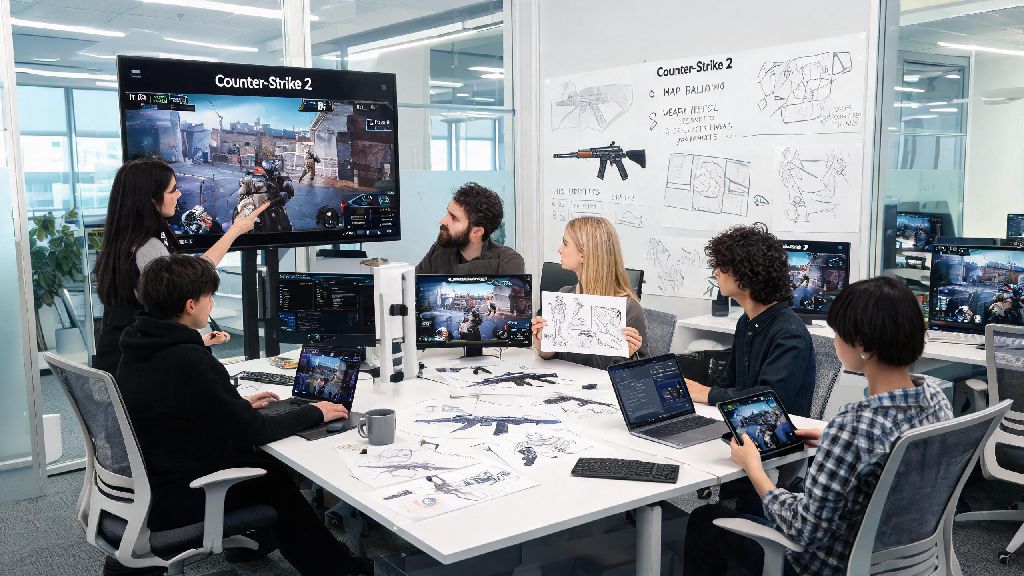
If you’ve logged hundreds of hours queuing for ranked matches, testing new smoke lineups, or unboxing cosmetic skins, you’ve probably wondered at some point who is making Counter Strike 2. The game, which replaced the decade-old Global Offensive in 2023, has stayed true to the franchise’s tactical, low-movement FPS roots while adding long-awaited quality of life upgrades. This guide breaks down the team behind the game, their design priorities, and how their experience with the series impacts every patch they release.
Who Is Making Counter Strike 2? The Core Valve Development Team
Counter Strike 2 is developed by a dedicated, in-house team at Valve, separate from the teams working on other franchise titles like Half-Life or Dota 2. Unlike many large game studios that cycle teams between projects, the CS2 team is made up almost entirely of developers who have spent years working on the Counter Strike franchise. Over 80% of the core CS2 development team has worked on the Counter Strike franchise for 7+ years, with many joining during the early days of Global Offensive’s launch.
The team is split into specialized sub-groups that each own a specific part of the game’s development and maintenance:
Many of the team’s leads are active players themselves, with publicly tracked ranked accounts that sit in the upper-tier ranks of CS2’s matchmaking system. That hands-on experience means they don’t just make decisions based on spreadsheets, but from their own time playing the game.
How Past Counter Strike Experience Shapes CS2’s Design Choices
One of the biggest concerns players had ahead of CS2’s launch was that the team would overhaul the core gameplay to appeal to a wider, more casual FPS audience. But the development team’s long history with the franchise meant they knew preserving the series’ tactical identity was non-negotiable. The team explicitly rejected requests to add movement mechanics that would stray too far from CS’s core tactical identity, including double jumps, sliding, or automatic health regeneration that is common in other popular FPS titles like Call of Duty or Apex Legends.
I’ve played Counter Strike since 2014, and I can tell the difference between devs who play their own game and those who don’t. For example, when the team rolled out a nerf to the M4A1-S in late 2023, they walked back the change three weeks later after widespread feedback from casual and pro players that it had made the gun unviable. They cited the 2018 AUG nerf backlash as a reference point, noting that they didn’t want to repeat the mistake of making a staple weapon useless for months before fixing it.
That willingness to course-correct quickly is a direct result of the team’s deep understanding of what makes Counter Strike work. They know that small changes to weapon recoil or movement speed can have huge impacts on how the game plays at every rank, so they test every adjustment for weeks with player focus groups before rolling it out to the full player base.
Third-Party Partners Working With the Core CS2 Team
While the core development work is done in-house at Valve, the team works with a wide range of third-party partners to keep the game running smoothly for its 20+ million monthly active players. The biggest group of external contributors are independent community creators who make cosmetic skins, map layouts, and game modes for the Steam Workshop. Over 60% of CS2’s official cosmetic content comes from independent community creators, not internal Valve artists, with creators earning a cut of every sale of their items in the in-game store or cases.
The team also works closely with esports tournament organizers like ESL and PGL to build out spectator and casting tools for professional CS2 events. They test new observer features directly with tournament casters to make sure they can easily switch between player perspectives, highlight key plays, and show live stats during matches. They also coordinate with server providers around the world to ensure consistent 64-tick and 128-tick server performance across all regions, fixing long-standing ping issues that plagued players in South America and Southeast Asia during CS2’s early access phase.
That said, all final decisions about gameplay changes, feature additions, and content releases still sit with the internal Valve CS2 team. Third party partners can submit feedback and requests, but nothing gets added to the game unless it aligns with the team’s long-term vision for the franchise.
What the CS2 Development Team’s Future Priorities Look Like
As of 2024, the CS2 team is focused on three core priorities that they’ve shared in regular community Q&As on the official Counter Strike subreddit. First, they’re working on closing remaining gaps in their anti-cheat system, with a specific focus on catching cheaters who use hardware spoofing to avoid VAC bans. The team has committed to releasing at least one small quality of life patch every two weeks for the next year, to address small annoyances players have been reporting, like long load times, lobby glitches, and inconsistent hit registration on lower-end PCs.
Second, they’re working to port over the last remaining popular CSGO maps that haven’t been updated for the Source 2 engine, including Cache and Militia. They’ve noted that they’re taking their time with these maps to make sure they feel familiar to long-time players, while still getting the lighting and texture upgrades that come with the new engine. Third, they’re testing major improvements to the matchmaking system to reduce the number of smurfs and unbalanced matches in lower rank lobbies.
They also have no plans to release a pay-to-win battle pass, a common concern among long-time players. All paid content will remain cosmetic only, just like it was in Global Offensive, with no plans to add paid weapons, attachments, or gameplay advantages to the in-game store. If you want to share feedback on these upcoming changes, you can submit questions during their monthly community Q&As, where they answer the top 10 most upvoted questions from players.
At the end of the day, the answer to who is making Counter Strike 2 is a group of passionate, long-time franchise fans who care more about preserving the game's core identity than chasing quick industry trends. They’re not perfect, and they made plenty of missteps during the game’s early access launch, but their consistent updates and willingness to listen to player feedback have made CS2 a worthy successor to Global Offensive for most players. If you want to keep up with their latest announcements, you can follow the official Counter Strike social media channels, or join the community Reddit to weigh in on upcoming changes.