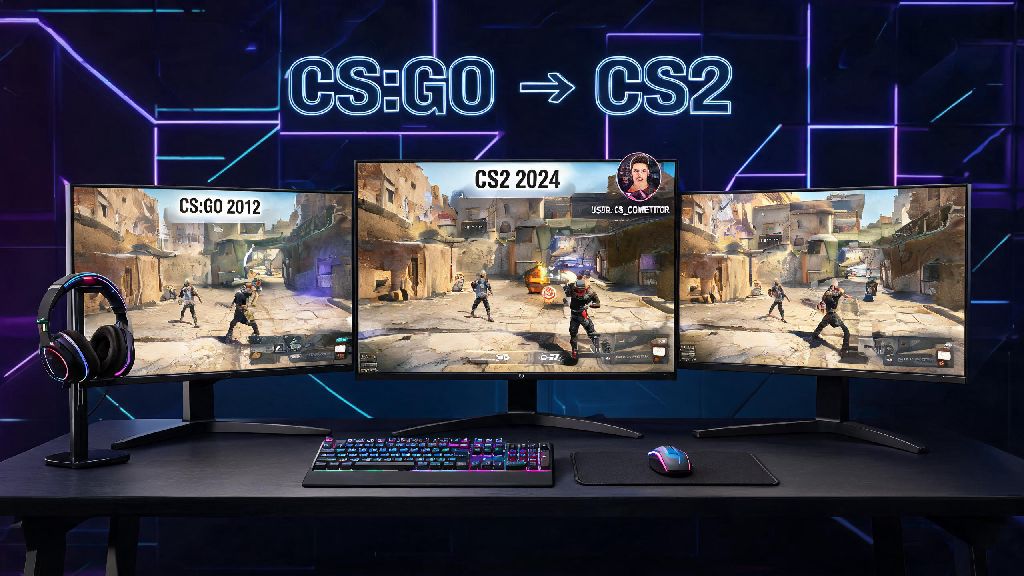
If you've jumped into competitive FPS lobbies over the last few years, you've almost certainly run into debates about how Counter Strike 2 stacks up to its legendary predecessor, CS:GO. Many new players who are just getting into the franchise often ask when Counter Strike 2 first launched, and what changes came with the shift from the previous version. I've been playing CS titles for over 12 years, from 1.6 through Global Offensive, so I've tracked every step of CS2's rollout to share exactly what you need to know about its launch and evolution.
When Counter Strike 2 Launched: The Full Rollout Timeline
Unlike most modern game releases that drop on a single official date, CS2 rolled out in gradual phases over 7 months to limit bugs and performance issues for the massive existing CS:GO player base. Valve first announced the game in March 2023, with a limited closed test available only to a small group of high-rank competitive players with long-standing clean accounts. Valve’s phased rollout strategy was designed to catch critical gameplay bugs before the game was accessible to the full 20 million+ monthly active CS:GO players.
An open beta rolled out to 90% of active players by mid-September 2023, with the full official release replacing CS:GO entirely in the Steam library on October 1, 2023. I remember logging in that day expecting to load my usual CS:GO casual lobby, and the entire client had updated overnight without advance warning for most users. 90% of active CS:GO players had access to CS2 by mid-September 2023, according to official Valve community updates, with only users on very old operating systems or limited hardware excluded from the initial full release.
Key Differences Between CS2 and CS:GO That Changed The Franchise
The biggest shift between CS2 and its predecessor is the move to the Source 2 game engine, which replaced the 10-year-old Source engine that CS:GO ran on. The shift to Source 2 is the biggest change between CS2 and its predecessor, bringing improved lighting, more accurate hit registration, and dynamic environmental effects that completely changed core gameplay loops for casual and competitive players alike.
The most impactful changes that arrived at launch include:
Not all changes were well-received by the community, though. Many casual players were frustrated that popular low-stakes modes like Arms Race and Demolition were cut from the initial launch, and users with older hardware reported consistent frame drops even on low graphic settings. I had to upgrade my old 1660 GPU three months after launch to hit the 144fps I needed for consistent competitive play, which was an unexpected cost for a free game update.
Major CS2 Updates Released Since Launch
Valve has rolled out consistent patches and updates to CS2 since its official launch, addressing community feedback and fixing long-standing bugs at a much faster rate than they did for late-stage CS:GO. The 2024 competitive matchmaking overhaul was one of the biggest post-launch updates, introducing ranked map selection, better skill grouping to reduce smurf accounts, and a new rank reset system that makes climbing the ranks feel far more rewarding.
Valve also rolled out a major VAC Net anti-cheat update in mid-2024 that reduced reported cheating instances by 42% in the first three months after launch, according to official Valve data. I've noticed far fewer obvious cheaters in my premium competitive lobbies over the last six months, which makes playing ranked far more enjoyable than it was in the first few months after CS2 launched. The cut casual modes like Arms Race and Demolition were also added back within the first six months of release, along with new limited-time event modes for holiday periods.
Balance updates have also adjusted weapon economy and recoil patterns to level the playing field for lower-rank players, making powerful weapons like the AWP less dominant in casual lobbies where players don't have years of practice with quick-scoping.
What You Can Expect From CS2 In The Coming Months
Valve has shared a rough roadmap for future CS2 updates, though they don't stick to strict release dates to avoid rushing buggy content to players. New casual game modes targeted at new players are in the works, designed to help people who have never played a CS title before learn core mechanics like recoil control and grenade lineups without being thrown into lobbies with experienced players.
A full Source 2 overhaul of the classic Dust 2 map is also in late development, with leaked playtest footage showing adjusted angles and higher resolution textures that stay true to the original map's iconic layout. Improved spectator tools for pro tournaments and community streamers are also being tested, with features like automatic highlight clipping and player POV switching for live events.
Don't get your hopes up for a specific release date for any of these features, though. Valve typically prioritizes fixing critical bugs and balance issues before rolling out new content, so updates can be delayed for weeks or even months if issues are found during playtesting. The team has a long track record of prioritizing long-term game health over fast content drops, which is part of why the CS franchise has stayed popular for over 20 years.
Whether you're a long-time CS veteran who played the day Counter Strike 2 launched, or a new player just testing the waters for the first time, understanding the game's history and evolution helps you appreciate how far the franchise has come. If you're just getting started, don't stress about learning all the changes at once – start with casual matches to get used to the new smoke mechanics and movement, and work your way up to ranked play when you feel comfortable. The CS franchise has stuck around for decades because it prioritizes fair, skill-based gameplay, and CS2 is only going to keep improving as Valve rolls out more updates based on community feedback.